
Joe Weisberg · 2013 - 2018The Americans
Through Soviet spies, The Americans reveals the internal contradictions of American statecraft.
Television to me falls short in so many ways. Almost all television in the US revolves around American exceptionalism and copaganda. Joe Weisberg’s The Americans is not quite free of these associations. Yet, there’s also something else happening.
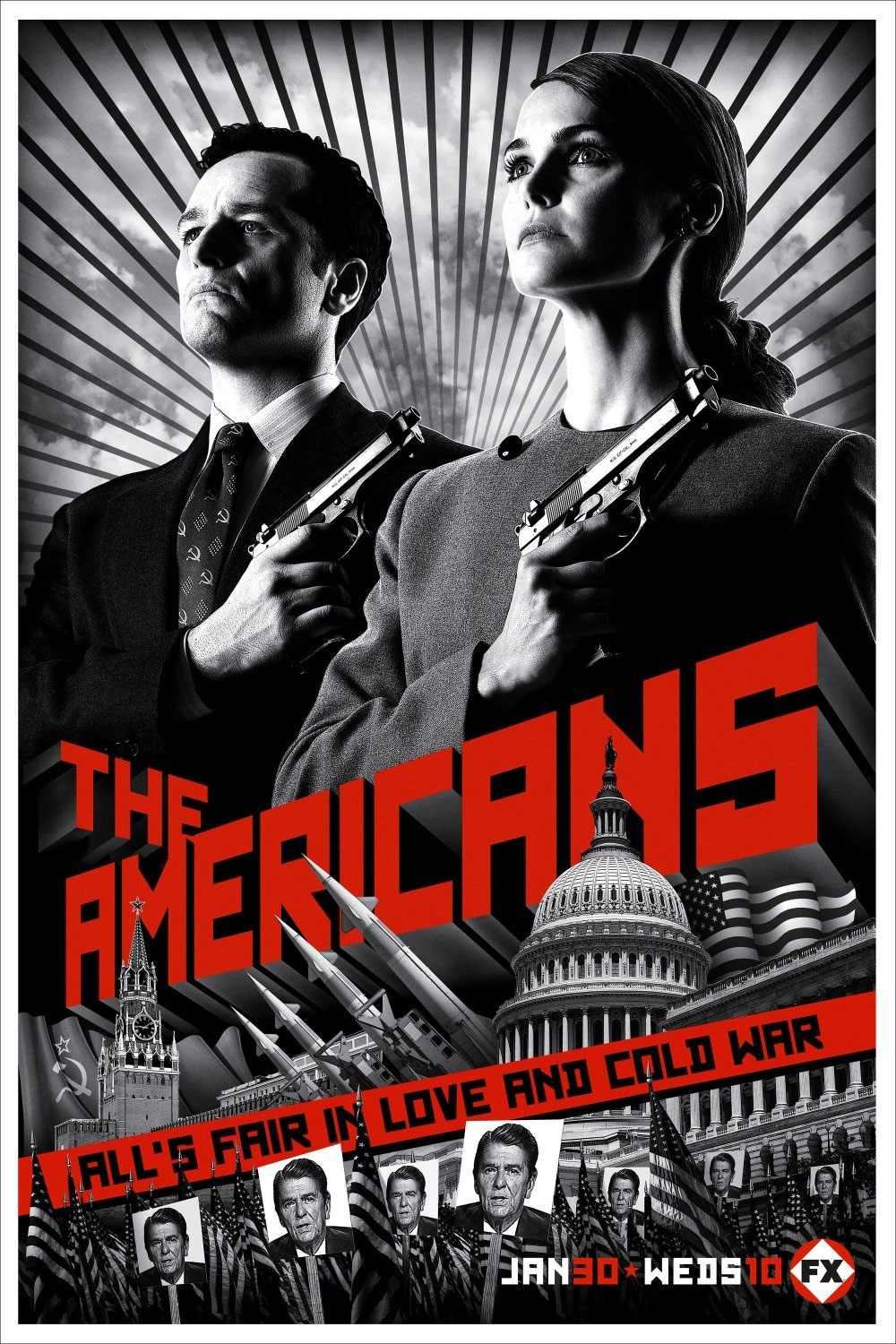
In a show which follows the journey of Soviet spies (Matthew Rhys and Keri Russell) and their kids masquerading as the all-American family, the tensions between national identity, culture, and the mechanics of statecraft become emotionally bracing amid the backdrop of the 1980s.
Alongside the usual fare of a sometimes sympathetic portrayal of American policing, is the question of how a family can survive while at once being grounded in particular society and space and also remaining committed to a national project which was, at one time and for some people, the model revolutionary national project.
It was a model that at the time was under serious duress. The lead characters cross lines that are justified by their loyalty to the state, rather than revolution, revealing something about the nature of state power in their crossings.
The maintenance of the state can enact a love and loyalty that sometimes requires a betrayal of the deeper valences of love and human connection. Ironically, these become lessons for actual Americans. Maybe.
The Americans offers the opportunity to probe questions, such as revolutionary movements and geopolitics. I recoil at the prospect of unwrapping these interests purely through a kind of excitement or incitement that the word “love” would normatively convey.
Nonetheless, I love it because I love thinking with it.